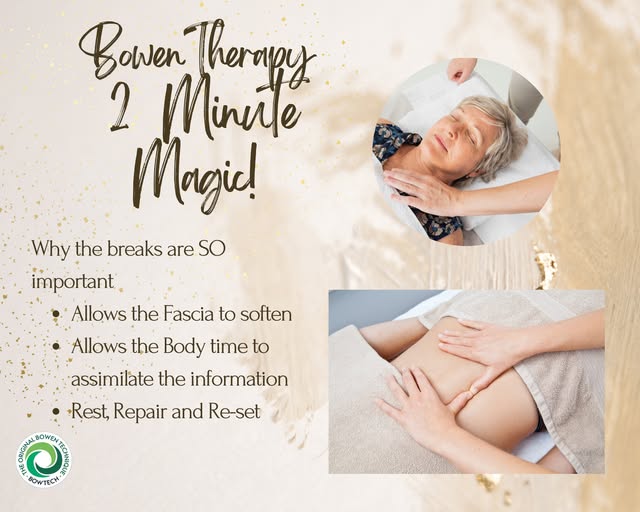
A FUNDAMENTAL difference between Bowen and other hands-on modalities is the ‘pause’ that comes in between moves. Some might say ‘the pauses attend to the causes’… thank you Bowen Training Australia for this catchy phrase!
The pauses are essential to the effectiveness of Bowen and the body’s own ability to reach a state of balance and healing. Each pause allows the body to process the subtle changes facilitated by the therapist, allowing for a deeper and more lasting effect.
While this becomes clear during training, in this article we explain some of the key benefits for those who may be considering signing up to Helen’s Bowen Technique beginners’ course.
1 Body integration
Bowen moves stimulate the delicate connective tissue (fascia) and nervous system. The pauses allow the body time to interpret this input, recognise any imbalance and kick-start a corrective response. Some therapists choose to leave the treatment room during this short pause, explaining to the client why they are doing so.
2 Fascial release
Postural bad habits, compensation patterns or injury can impact the effective working of the fascia. Each Bowen move challenges this ‘bad’ muscle memory, helping to re-align the fascia and release tension.
3 Brain processing
The pauses also provide time for the brain to process the physical move, leading to improved muscle memory (See Point 2 above) and postural adaptation.
4 Enhanced relaxation
The pauses encourage a deeper state of relaxation enabling the body to enter a calmer ‘parasympathetic’ state which is crucial for healing and repair.
5 Subtle reaction
The body may respond to Bowen moves with a sensation of tingling, warmth or cold during the pauses. Gurgling in the stomach may also occur and therapists always reassure the client this is quite normal. These are all positive signs indicating the body is actively responding to the treatment.
As Helen explains: “A simple pause might be just two minutes, although some procedures require longer. The length and nature of each pause can vary from person to person, and from session to session. This reflects each person’s unique healing processes linked to the presenting symptoms and gives vital feedback to the therapist to tailor a successful session for the benefit of the client.”
Photo: Bowen Training UK